
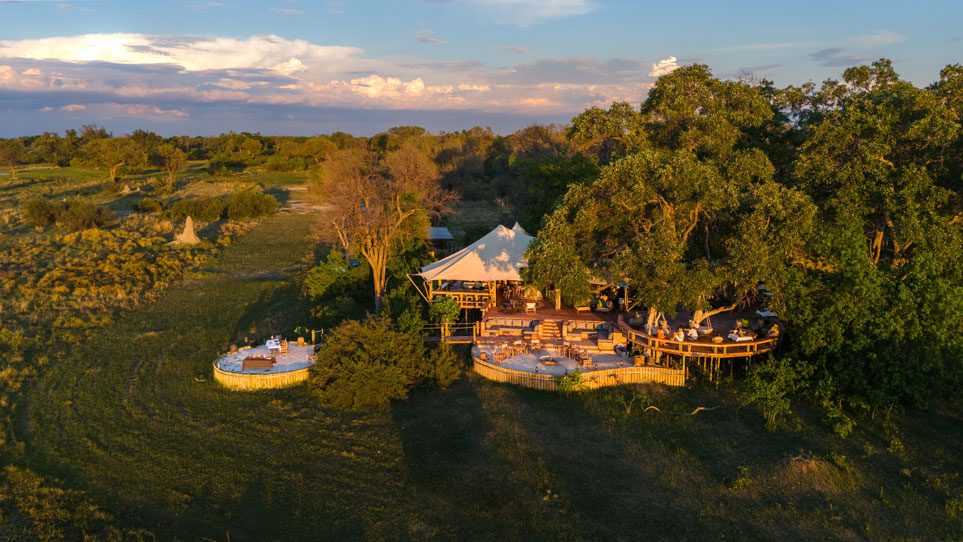
Okavango Delta, where waterways, channels, lagoons and floodplains
create one of Africa’s most unique ecosystems. Water-based safaris offer a
quieter, slower and more reflective way of experiencing the bush where
movement is gentle, sounds are natural, and wildlife is often encountered at
very close range without disturbance.
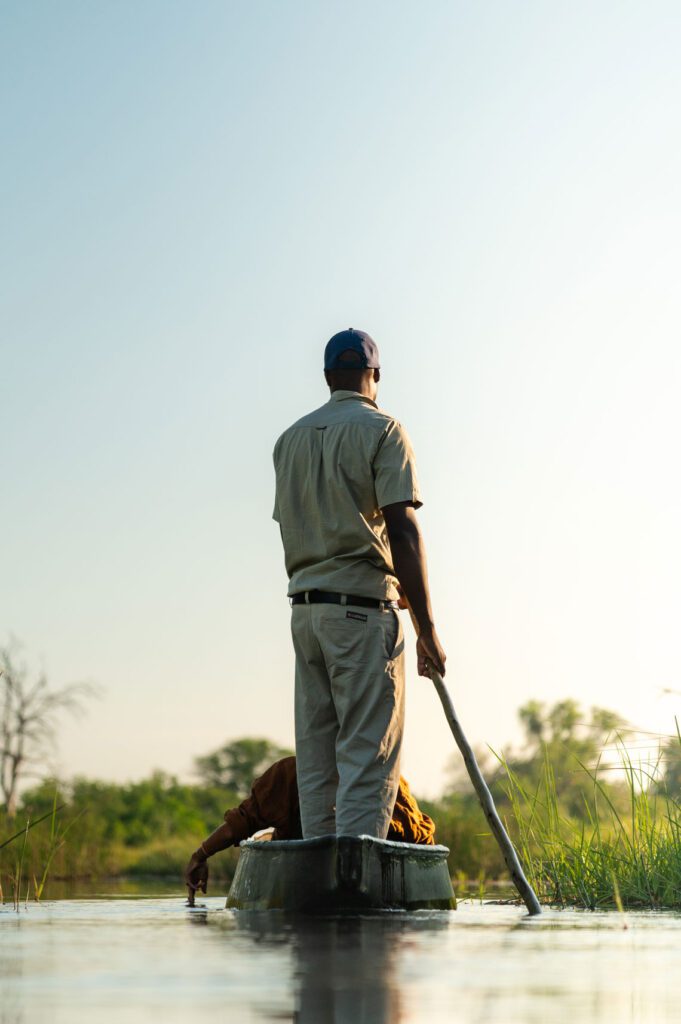
Mokoro Excursions – Traditional Delta Experience
The mokoro is a traditional dugout canoe, historically used by communities
of the Delta for transport through the shallow waterways. Today, it remains
one of the most authentic and peaceful ways to explore the Okavango.
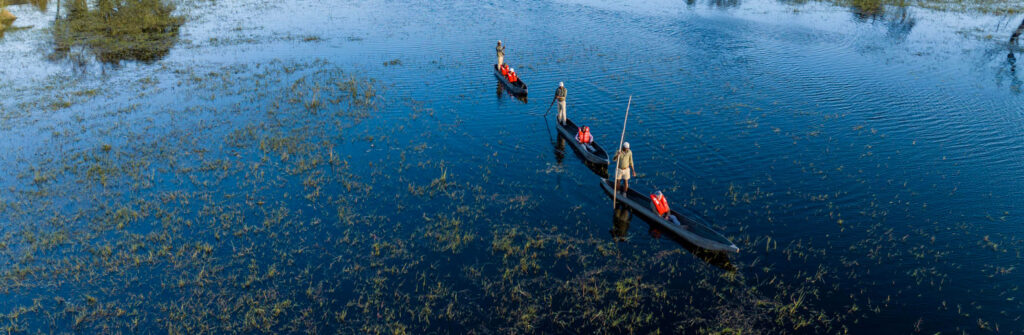
Pushed quietly through the water by a skilled poler, the mokoro glides
almost silently through narrow channels lined with reeds, papyrus and
water lilies. There is no engine, no rush, and no artificial noise only the
natural rhythm of water and movement.
This silence allows for a unique level of immersion.
From a mokoro, wildlife is experienced differently. Instead of scanning vast
landscapes, attention Shifts to detail and proximity:
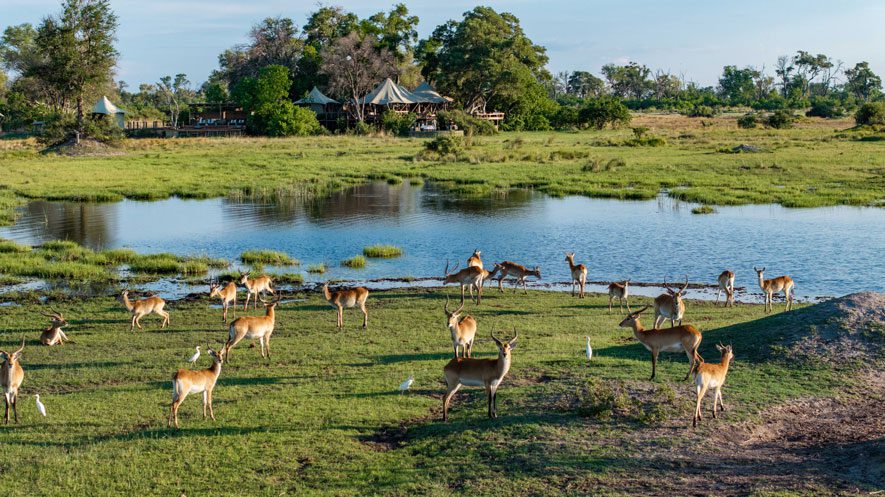
• Red lechwe grazing in shallow floodwaters
• Elephants crossing channels at close range
• Reed frogs calling from vegetation
• Kingfishers, herons and fish eagles overhead
• Hippos surfacing quietly at a distance
• Tracks of animals coming down to drink at the water’s edge
The experience is not about speed or distance, but about stillness and
presence. Movement is slow, deliberate and deeply connected to the
environment. Guides and polers also share knowledge of the Delta
ecosystem explaining water systems, plant life, animal adaptations and the
seasonal changes that shape this living wetland.
Boat Cruises – Wider Exploration of the Delta Channels
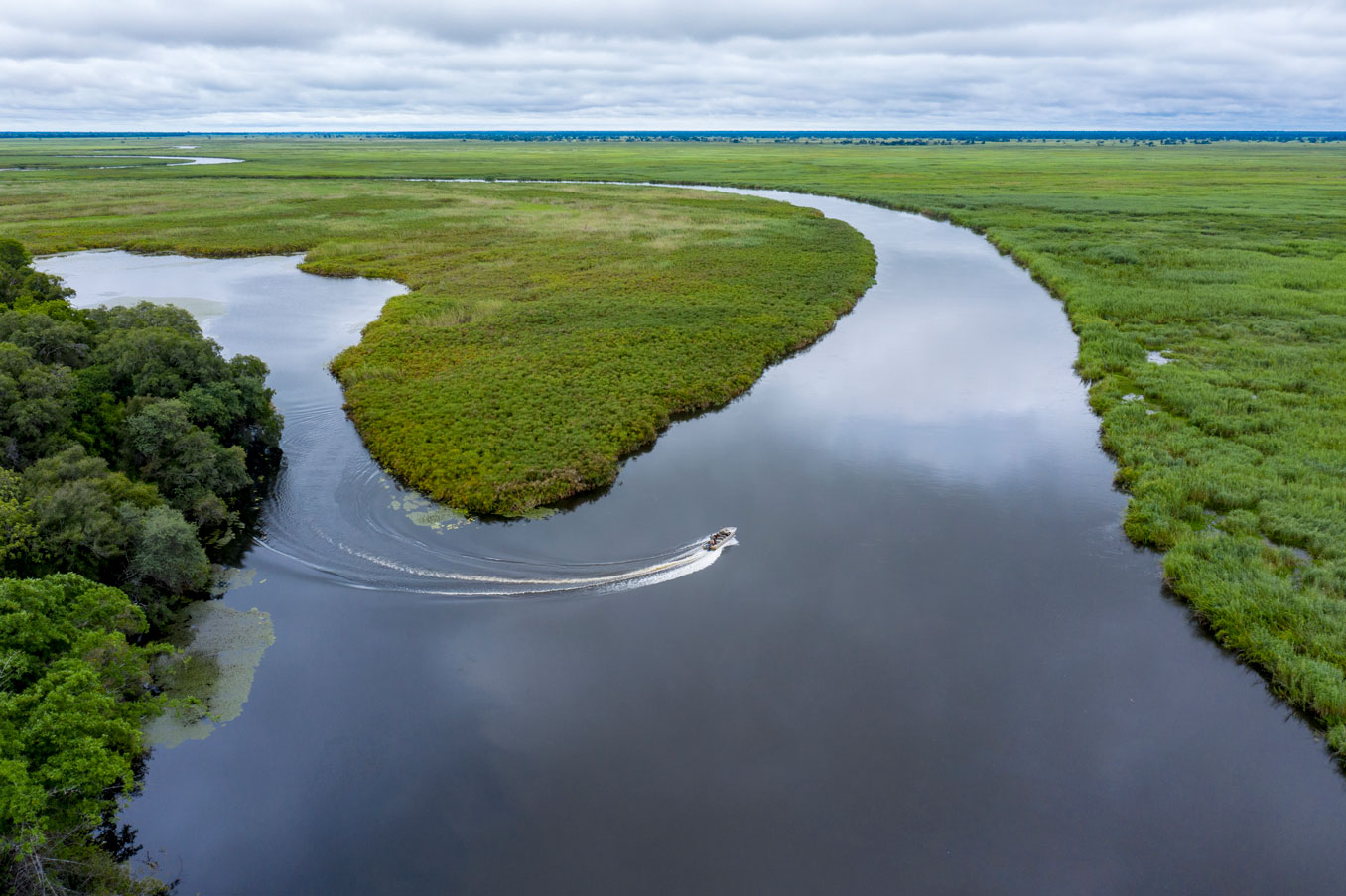
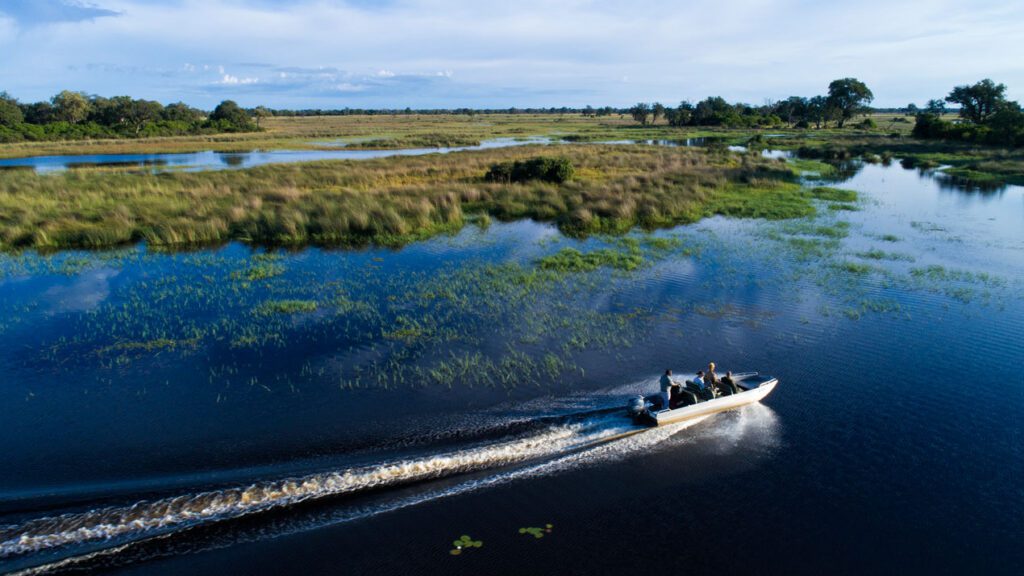
Where deeper or wider waterways allow, boat cruises offer a broader
perspective of the Okavango Delta system. Unlike mokoro travel, boats
allow access to larger channels, open lagoons and extended water routes.
This makes it possible to explore greater distances while still maintaining a
close connection to wildlife and nature.
This makes it possible to explore greater distances while still maintaining a
close connection to wildlife and nature.
Boat-based safaris often focus on:
• Elephants crossing between islands and floodplains
• Hippo pods in their natural aquatic environment
• Crocodiles basking along sandbanks
• Large concentrations of waterbirds in breeding or feeding areas
• Sunset movement of wildlife towards water sources
The experience is particularly powerful in the late afternoon, when light
softens and reflections stretch across the water. The Delta becomes calm and atmospheric, with golden light illuminating reeds, channels and distant
wildlife movement. The perspective from the water is entirely different
from land-based safari. It reveals the Delta as a vast interconnected system
not just islands and channels, but a living landscape shaped by water flow
and seasonal transformation.
A Different Rhythm of Safari Life
Both mokoro excursions and boat cruises offer a contrast to vehicle-based
safari movement. Where game drives are active and tracking-led, water-
based safaris are quiet, reflective and observational. They invite guests to
slow down and experience the wilderness in its most peaceful form. There is
a strong emotional quality to these experiences the sound of water against
wood, the movement through reeds, the stillness of wildlife at close range,
and the sense of drifting through an ancient, untouched landscape.
Moments often feel subtle but powerful:
• A herd of elephants moving silently through water at dusk
• A fish eagle calling across open channels
• The ripple of hippos breaking still water at sunrise
• The quiet passage through narrow reed-lined waterways
• Sunset reflecting across endless floodplains
These are experiences defined not by action, but by atmosphere.
Integration into the Safari Journey
Mokoro and boat activities are carefully integrated into safari itineraries
depending on season, water levels and access conditions. In the Delta,
water-based exploration often complements land-based mobile safaris,
creating a balanced experience of both movement and stillness, land and
water, action and reflection. This combination allows a fuller understanding
of Botswana’s ecosystems from predator tracking on land to quiet
observation within the waterways of the Delta.
A Journey into Silence and Water
Water-based safaris with ZESAVA offer a rare sense of calm within the
wider adventure of a mobile safari. They are not simply activities, but
experiences that shift perception where the wilderness is not followed, but
gently drifted through. In these moments, Botswana reveals a softer side of
itself: quiet, reflective, and profoundly alive.
PLAN YOUR TRIP
TRAVEL PLANNING & ROUTE DESIGN
Safaris designed around real conditions, not maps.
Planning a safari in Botswana requires a detailed understanding of how the
country’s landscapes actually function on the ground. It is not simply about
choosing destinations, but about understanding how regions connect, how
wildlife moves between them, and how seasonal changes affect access,
timing, and overall travel flow.
Every itinerary begins with a careful review of key practical and
environmental factors. These include:
• Total time available for travel
• Client expectations (whether the focus is on active movement or a
slower, immersive safari pace)
• Seasonal timing and how it affects wildlife distribution and
accessibility
• Practical route connections between regions, camps, and ecosystems
Botswana is vast, remote in many areas, and distances can be misleading. A
journey that looks simple on a map may involve long travel times, difficult
terrain, seasonal limitations, or limited access depending on water levels and
road conditions.
For this reason, safari planning must always be realistic, flexible, and based
on field knowledge rather than assumptions.
Key Regional Considerations
Okavango Delta
The Delta is a dynamic water system, and routes are strongly influenced by
seasonal flooding. Water levels determine where vehicles, boats, and
mokoro travel are possible. Certain areas may only be accessible during
specific times of the year, which directly affects itinerary design. Movement
here often requires precise coordination between land and water-based
travel.
Chobe National Park
Chobe is shaped by the Chobe River system. During the dry season, large
concentrations of wildlife gather along the riverfront, influencing both
game viewing patterns and road usage. Access and sightings can vary
significantly depending on seasonal movement and water availability.
Kalahari Region
The Kalahari is defined by its vast open spaces and low infrastructure
density. Distances between wildlife areas are greater, requiring careful
planning of travel times, fuel logistics, and realistic daily movement limits.
The experience here is often more remote and wide-ranging, with a strong
sense of space and isolation.
Designing a Practical Safari Route
The goal of route design is not to include as many places as possible, but to
create a journey that flows naturally and works in real conditions.
Each itinerary is structured to ensure:
• Travel days are realistic and not rushed
• Movement between regions is efficient and logical
• Time in wildlife areas is prioritised over time in transit
• Routes follow natural geographic and ecological flow
• Unnecessary backtracking is avoided
• Each destination builds on the previous experience
A well-designed safari should feel balanced. Travel should not feel like
logistics; it should feel like part of the experience itself.
LODGE & SAFARI COORDINATION
Each camp chosen as part of a wider journey.
Selected lodges and safari camps are not treated as isolated stops. Instead, each property is chosen for how it fits into the overall route and contributes to the flow of the journey.
Every lodge or camp is assessed based on:
• Its location within the broader itinerary
• Seasonal accessibility and operating conditions
• Wildlife activity in the surrounding area
• Practical travel connections to the next destination
• Its role in the overall safari experience
The objective is continuity. Each stop should feel like a natural progression, not a disconnected visit.
A strong safari route allows one landscape to lead into the next smoothly, both geographically and experientially. This ensures the journey feels cohesive, well-paced, and connected to real conditions on the ground.
OUR APPROACH TO SAFARI DESIGN
Built from real -time conditions, not fixed templates.
Every safari is designed individually. There are no standard itineraries,
because Botswana does not offer standard conditions. Wildlife movement,
water availability, weather patterns, and seasonal accessibility all change
throughout the year. A meaningful safari must respond to these changes
rather than ignore them.
Each journey is created based on:
• Seasonal wildlife distribution and movement patterns
• Water availability across regions and ecosystems
• Accessibility of roads, tracks, and floodplains
• Practical travel distances and terrain conditions
• Real-time environmental and field knowledge
This ensures that every itinerary is specific to the time of travel. No two
safaris are ever identical.
The focus is not on visiting the most places, but on being in the right place
at the right time. Positioning is what defines the quality of the experience.
Travel is therefore purpose-led. Each movement has intention, and every
stop is selected based on current conditions rather than convenience or
standard planning.
Group Size & Safari Operation
To maintain the quality, exclusivity, and smooth operation of our mobile
safaris, Zesava operates with defined group sizes.
• Minimum group size: 4 guests per departure
• Maximum group size: 10 guests per departure
This ensures each safari remains personal, well-coordinated, and fully
supported in remote wilderness environments.
Small group numbers allow for:
• Better wildlife viewing experiences without crowding
• Flexible and responsive guiding in the field
• Easier movement between remote locations
• A more intimate and personalised safari atmosphere
• Stronger connection between guests, guide, and environment
In certain cases, smaller groups of 1–3 guests may be accepted, however pricing will be calculated based on a minimum of 2 full-paying guests, as operational costs in mobile safari environments remain fixed regardless of group size.
This structure ensures that every safari maintains the highest standard of
guiding, safety, comfort, and logistical support, while still allowing
flexibility for individual travellers.
SAFARI PACKING GUIDE & TRAVEL INFORMATION
Simple, practical preparation for a wilderness journey.
A safari is very different from a typical holiday. You are travelling into
remote natural environments where comfort, practicality, and preparation
make a significant difference to the experience.
What to Pack for a Safari
1. Clothing
Clothing should be practical, comfortable, and suitable for changing
temperatures.
• Lightweight, breathable shirts (short and long sleeves)
• Lightweight trousers or safari pants
• Warm fleece or jacket (early mornings and evenings can be cold)
• Comfortable walking shoes or boots
• Hat or cap for sun protection
• Swimwear (only if your lodge has a pool)
Neutral colours such as beige, khaki, green, and brown are recommended, as
they blend well with the environment and are practical for wildlife viewing.
Avoid bright colours and heavy formal clothing.
2. Personal Essentials
• High-factor sunscreen
• Sunglasses with UV protection
• Insect repellent
• Personal medication (if required)
• Basic toiletries
• Reusable water bottle
• Small daypack for game drives
3. Photography & Safari Equipment
• Camera with zoom lens (strongly recommended)
• Extra batteries and memory cards
• Binoculars (very important for wildlife viewing)
• Power bank for charging devices
• Phone for casual photography
Wildlife viewing often involves distance and movement, so good optics
significantly improve the experience.
4. Travel Documents
• Passport
• Visa (if required)
• Travel insurance details
• Flight and booking confirmations
• Safari itinerary
Keep all documents easily accessible during travel.
What a Safari Includes
Most safari itineraries are designed to be fully supported and seamless.
Depending on the package, inclusions typically cover:
• All transfers between safari locations
• Accommodation (lodges, camps, or mobile safari setups)
• Full board meals (breakfast, lunch, dinner)
• Guided game drives and wildlife activities
• Park and conservation fees (where applicable)
• Professional guiding and field support
Some itineraries may also include walking safaris, boat excursions, mokoro
trips, or cultural experiences depending on region and season.